Identifying hail damage roof Utah requires checking for dark impact marks, missing shingle granules, and visible cracks or dents. Homeowners should document these signs immediately to facilitate a successful insurance claim and ensure professional repairs protect the home from structural leaks.
A sudden Utah hailstorm often leaves homeowners standing in their driveways, squinting at their shingles and wondering if that rhythmic pounding caused real damage. While some impact marks are obvious, the subtle bruising of a roof can lead to catastrophic moisture intrusion if left unaddressed. Understanding the nuances of hail damage is critical for protecting your property value and ensuring a successful insurance claim. In this guide, we provide an expert breakdown of what to look for on your Utah roof, ranging from the significance of hail size to the technicalities of the 25 percent replacement rule. You will also learn the precise steps to take when dealing with insurance adjusters, ensuring you receive the coverage you deserve. Whether you are in Box Elder County or the surrounding valleys, this local perspective will help you navigate the aftermath of a storm with confidence.
Recognizing the Signs: What Does Hail Damage Look Like on a Utah Roof?
When a storm rolls through Box Elder County, the impact on your home is not always obvious from the driveway. Identifying hail damage roof Utah homeowners can rely on requires a close look at the specific materials protecting the structure. Damage manifests differently depending on whether you have asphalt shingles, metal panels, or specialized tiles.
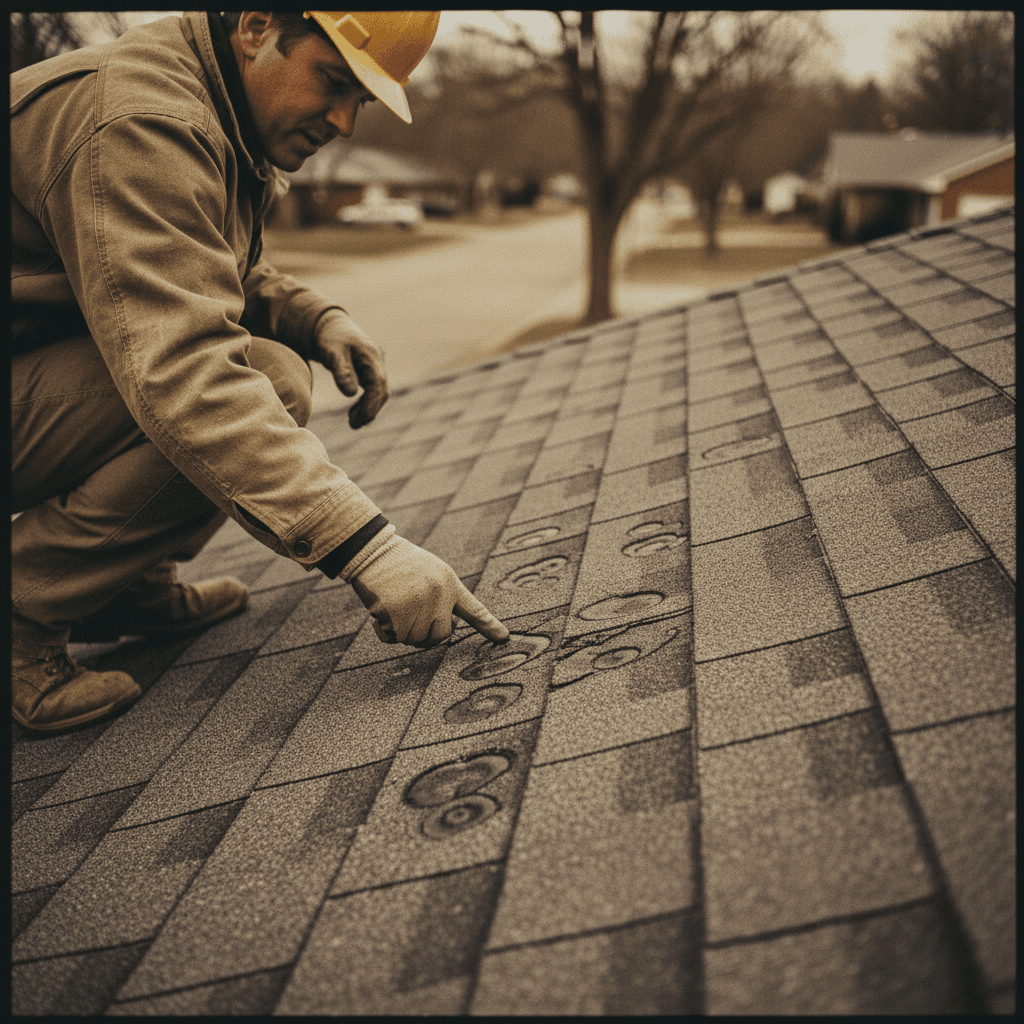
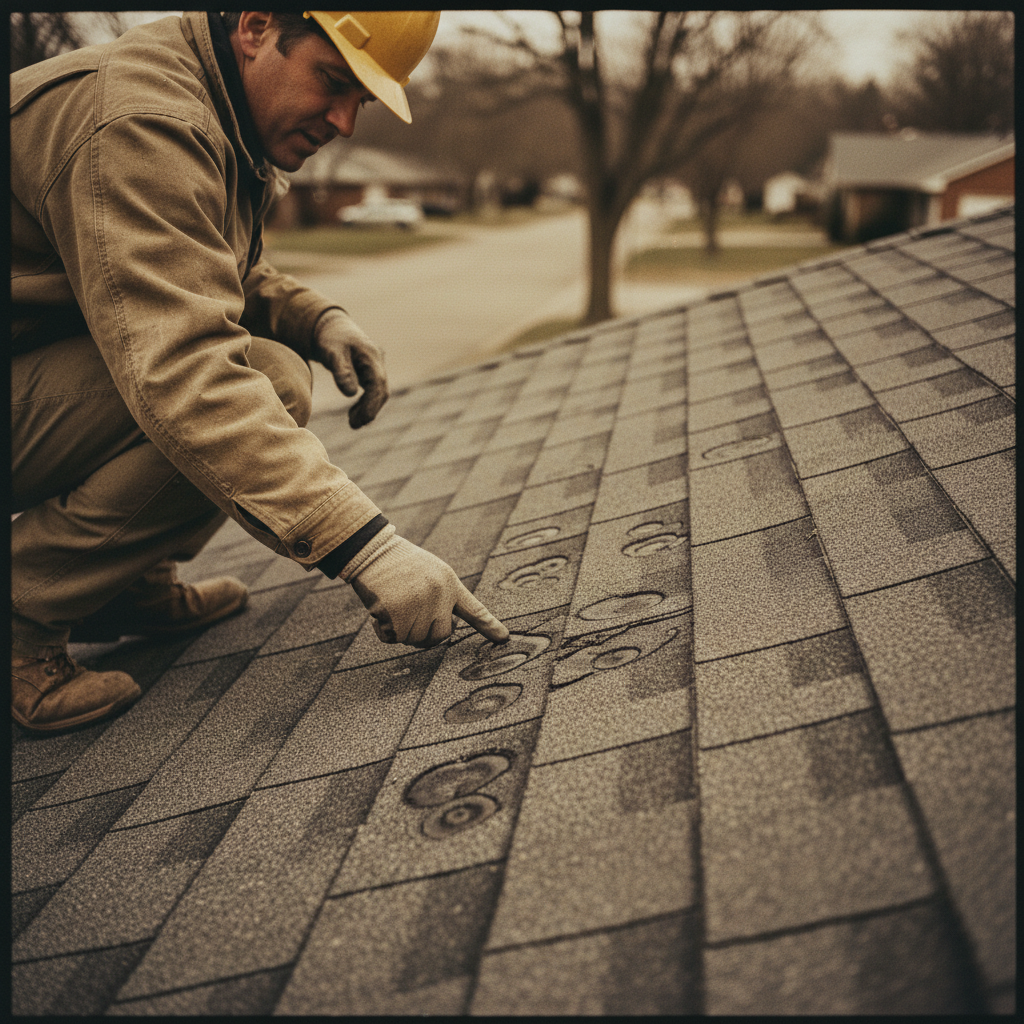
For traditional asphalt shingles, the most common indicator is a phenomenon known as bruising. This occurs when a hailstone strikes with enough force to compress the shingle mat against the roof deck. These spots are often soft to the touch, similar to the bruise on an apple. You may also notice shiny black spots where the protective granules have been completely knocked away, exposing the underlying bitumen or felt. A practical way to check for this without climbing a ladder is to inspect your gutters and downspouts. If you see a heavy accumulation of granules that look like coarse sandpaper, your roof has likely lost a significant portion of its protective layer.
Metal roofing systems show damage through distinct D-shaped dents. While metal is highly durable, large hailstones can create indentations that compromise the integrity of seams or fasteners. It is vital to distinguish between purely cosmetic scuffs and deep dents that could hold water, which eventually leads to rust or structural fatigue in Utah's varied climate.
Homeowners often ask, "What does minor hail damage look like on a roof?" even when the storm seemed light. Minor damage often appears as small, circular dimples that do not cause immediate leaks. However, even these small indentations are a serious concern because they compromise the shingle's structural integrity over time. Once the granules are displaced, the sun’s UV rays quickly degrade the exposed asphalt, leading to cracks and leaks within just a few seasons.
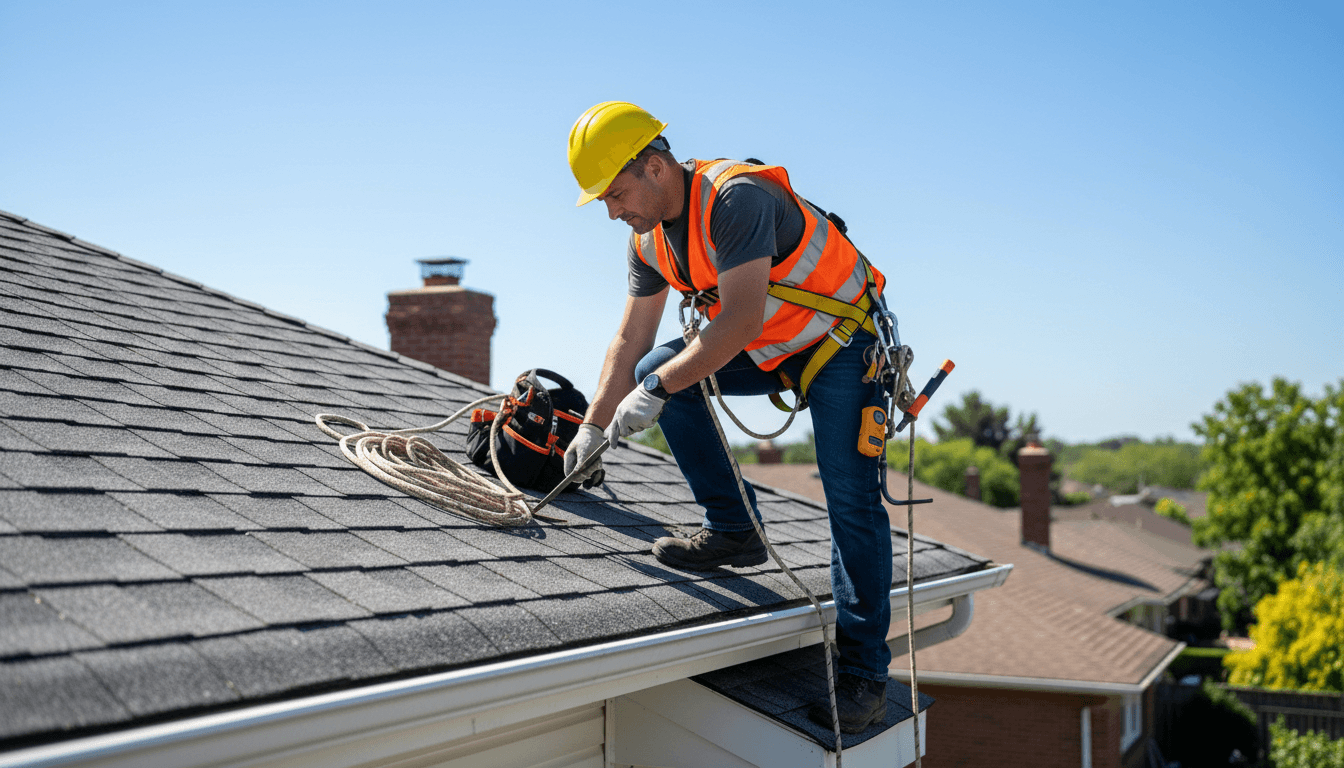
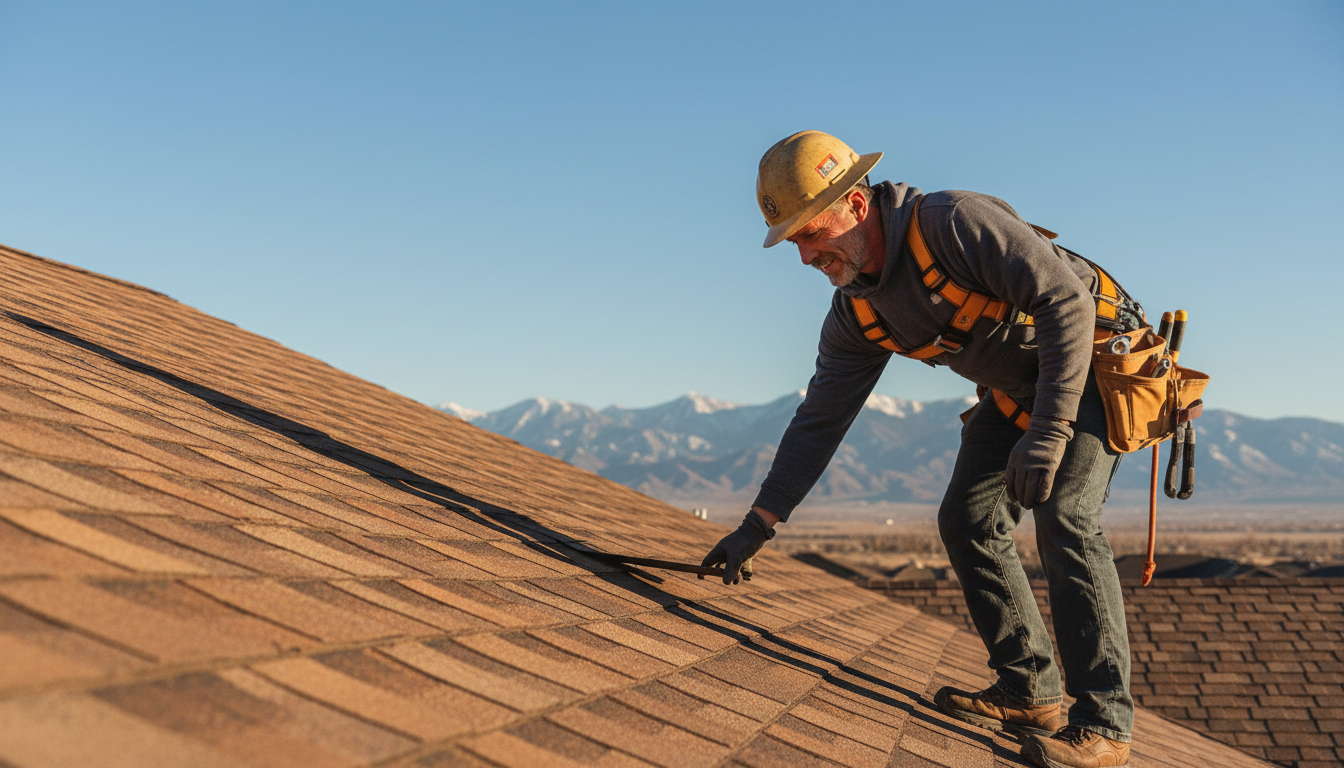
In Box Elder County, hail rarely travels alone; it is almost always accompanied by high winds. For this reason, you should also look for lifted or creased shingles. If a shingle has been caught by a gust and bent upward, the seal is likely broken, leaving the roof vulnerable to wind-driven rain. If you suspect your property was in the path of a storm, you should contact Anders Roofing for a professional assessment. Our team provides reliable residential roofing services to ensure your home remains protected against the next Utah weather event.
Does Hail Size Matter? The Risks of 1 Inch Hail and Larger
A common question homeowners ask following a storm is, "Can 1 inch hail damage a roof?" The short answer is yes. While pea-sized stones usually bounce off without incident, stones measuring 1 inch, roughly the size of a quarter, mark the threshold where functional damage becomes a statistical probability. At this size, the impact force is often enough to fracture the shingle mat; this is particularly true if the roof is already several years old and the asphalt has become less flexible over time.
Wind speed is a critical variable for hail damage roof Utah residents must consider. A 1 inch hailstone propelled by a 50 mph gust carries significantly more kinetic energy than one falling in calm air. This horizontal force causes the hail to strike at an angle, which is more likely to dislodge protective granules and compromise the shingle matting.
In contrast, "golf ball" sized hail, approximately 1.75 inches, almost guarantees functional damage. These larger stones can crack underlying wooden decking or shatter the seals on plastic vents and pipe flashings. However, homeowners should not ignore intense storms involving smaller stones. If a storm was characterized by high volume and high wind, you should contact Anders Roofing for a detailed assessment. Ensuring your reliable residential roofing services are addressed promptly can prevent a minor storm event from turning into a major interior leak.
Navigating the Claim: What Not to Say to a Roof Insurance Adjuster
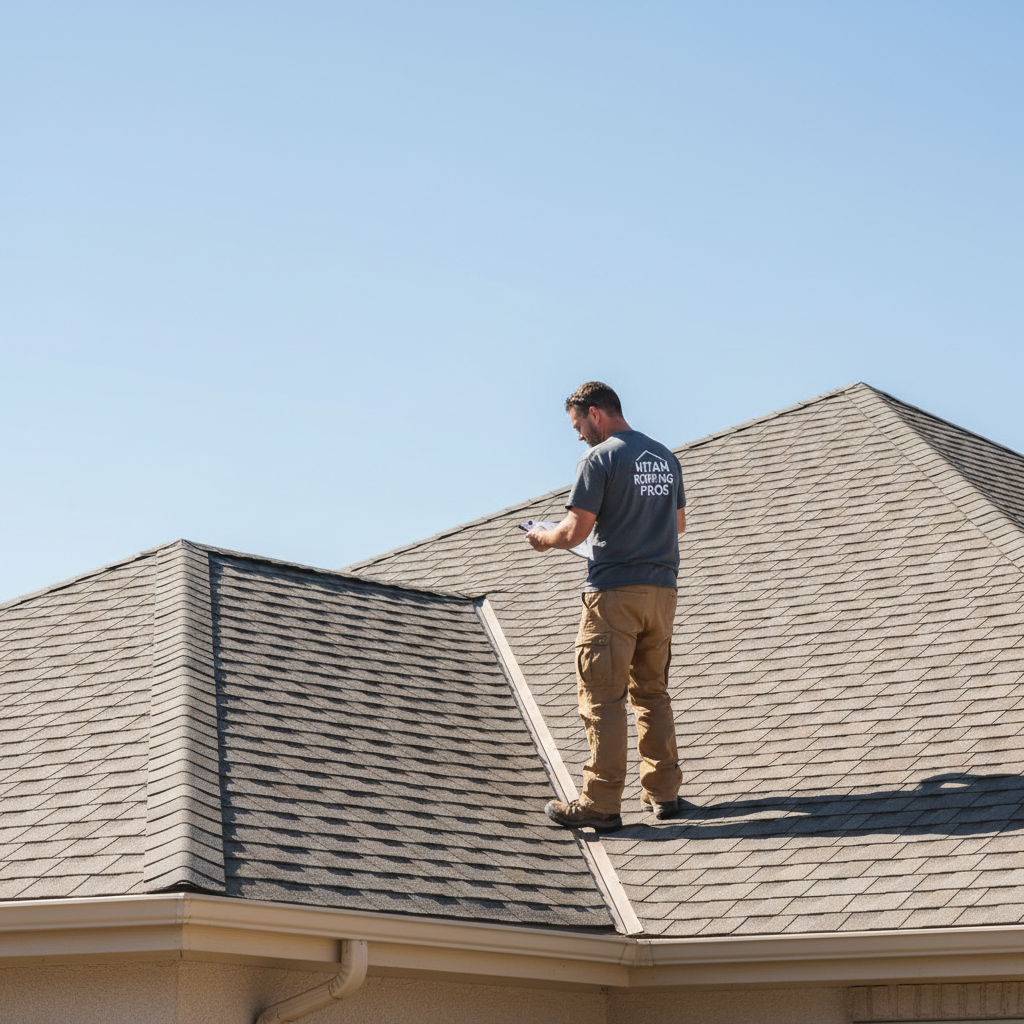
Filing a claim for hail damage roof Utah residents experience often feels like a high-stakes negotiation. Once you identify that a storm has caused impact marks or granule loss, your interaction with the insurance adjuster will determine the success of your claim. While adjusters are generally professional, their primary responsibility is to protect the insurance company's bottom line by minimizing payouts. This means they are actively looking for "pre-existing wear and tear" to justify a claim denial.
To protect your interests, you must be careful with your phrasing. Avoid making casual remarks like "my roof was already getting old" or "it was probably time for a new one anyway." These statements give the insurance company grounds to argue that the damage is a result of age rather than a specific storm event. Similarly, never say "I am not sure when this happened." Insurance policies require a specific date of loss to trigger coverage. If you cannot point to a specific weather event, the claim may be rejected immediately.
Instead, use factual and neutral language. Prepare by identifying the specific date the storm occurred. Use phrases like, "I noticed these specific impact marks and heavy granule loss in the gutters following the storm on [Date]." This keeps the conversation focused on the sudden, accidental damage caused by the weather rather than the general condition of the property.
One of the most effective ways to ground the conversation in data is to contact Anders Roofing for a professional inspection before the adjuster arrives. When you provide a detailed inspection report from a contractor, you are not just offering an opinion; you are providing evidence. A professional report will document hail diameters, strike frequency per square, and damage to soft metals like box vents or flashing. Having this documentation in hand ensures the adjuster is held to a high standard of accuracy. When you invest in reliable residential roofing services, you gain an advocate who understands how to translate physical damage into the technical language insurance companies require for a fair assessment.
Repair vs. Replacement: Understanding the 25 Percent Rule
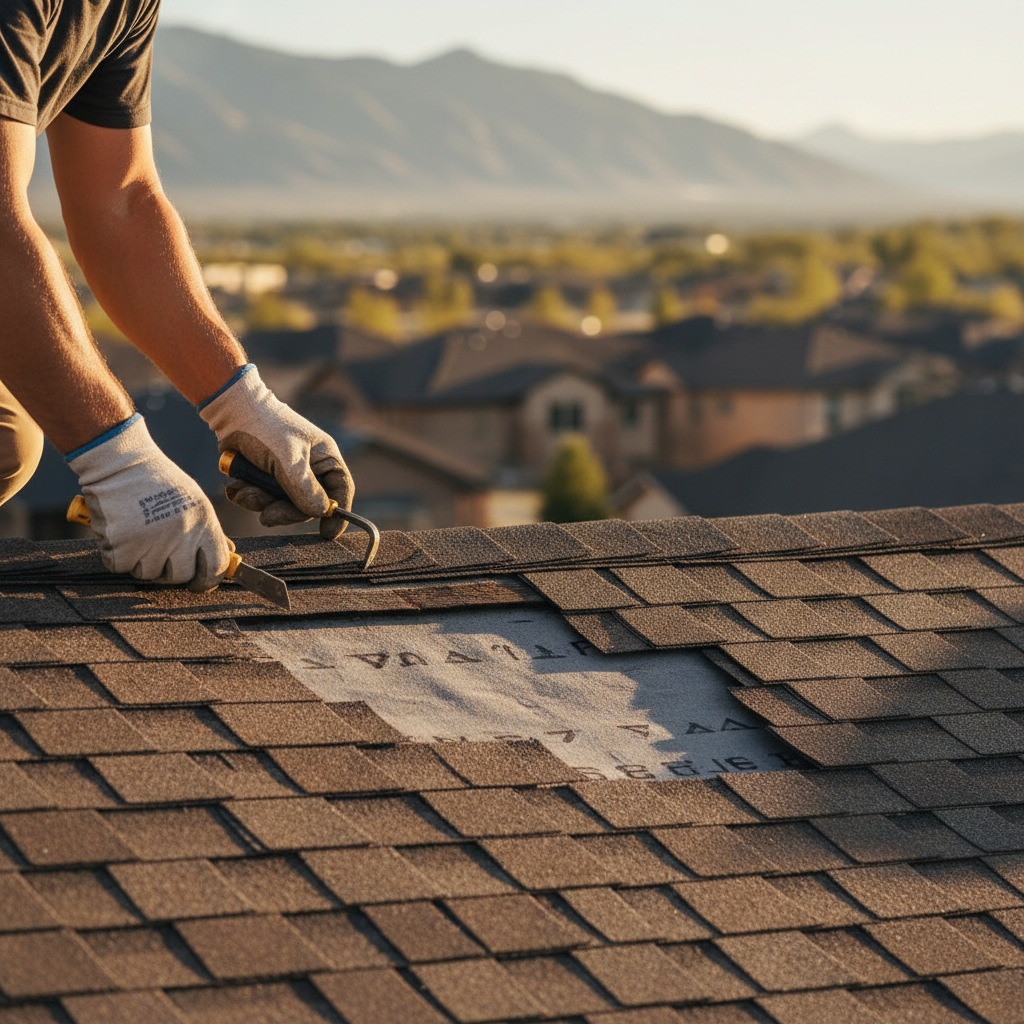
Determining whether a storm requires a simple patch or a full overhaul involves more than just counting dents; it often involves navigating local building codes. A critical standard in the industry is the 25 percent rule. Under this regulation, if more than 25 percent of a roof surface or a specific roof section is damaged within a 12 month period, the entire roof must be replaced to meet current building code requirements. This ensures that the structure benefits from a uniform, modern secondary water barrier and proper ventilation rather than a patchwork of old and new materials.
Choosing between a localized repair and a full replacement requires a look at the long term performance of the system. In Box Elder County, the trade-offs are significant due to Utah's extreme temperature swings. Asphalt shingles expand and contract daily as temperatures fluctuate from freezing mornings to high-UV afternoons. When you patch a section of a hail damage roof Utah residents often find that they are installing fresh, flexible shingles next to older, brittle ones. These materials react differently to thermal stress, which often causes the transition areas to pull apart or leak prematurely.
If your inspection reveals widespread strikes, a full replacement is frequently the more practical choice for long term durability. Modern systems installed by Anders Roofing are designed to function as a cohesive unit. To determine if your storm impact has crossed the threshold for a full replacement, you should contact Anders Roofing for a precise measurement of the affected area. Opting for reliable residential roofing services that prioritize code compliance ensures your home remains protected and your warranty stays valid.
The Homeowner Checklist: Steps to Take After a Storm
Taking immediate action after a storm prevents secondary water damage and secures your position with your insurance carrier. Follow this checklist to ensure a thorough recovery process:
Perform a safe ground-level inspection. Avoid climbing onto a potentially slick or compromised roof. Instead, walk the perimeter to look for dented air conditioning fins, pockmarks on mailboxes, or impact marks on soft metal downspouts.
Document the scene. Take clear photos of any hail remaining on the ground and visible damage to your property. These images serve as vital evidence for your claim timeline.
Request a professional assessment. contact Anders Roofing for a comprehensive manual or drone inspection. A technician can identify subtle fracturing that indicates a compromised shingle mat.
File the insurance claim. Provide your insurer with the specific date of the storm and the preliminary findings from your professional inspection.
Meet the adjuster with your contractor. Request that your roofing expert attend the adjuster's walkthrough.
Having a local professional on-site is the most effective way to ensure a fair assessment. We speak the technical language of adjusters and point out specific signs of hail damage roof Utah adjusters might otherwise classify as general wear and tear. This collaborative approach ensures your reliable residential roofing services are accurately accounted for and fully covered by your policy.
Why Local Expertise Matters for Box Elder County Roofing
Following a major weather event, national storm chaser companies often flood Box Elder County, offering quick repairs before disappearing to the next disaster zone. These transient outfits lack the local accountability required for long term protection. In Utah, our unique high altitude environment, characterized by intense UV exposure and extremely dry air, causes hail damage roof Utah systems to degrade differently than in humid regions. When a hailstone dislodges granules in a city like Brigham City, the exposed asphalt bakes under the relentless sun, becoming brittle and cracking much faster than it would elsewhere.
Choosing a contractor rooted in the community means your roof is serviced by professionals who understand the specific stresses of our climate. We focus on providing durable systems for homeowners in Tremonton and surrounding areas, ensuring every installation can withstand heavy snow loads and summer heat cycles. Anders Roofing emphasizes clear communication throughout the entire process, so you are never left guessing about the status of your project. For a professional assessment that prioritizes local standards, you should contact Anders Roofing to secure reliable residential roofing services built for Utah’s specific demands.