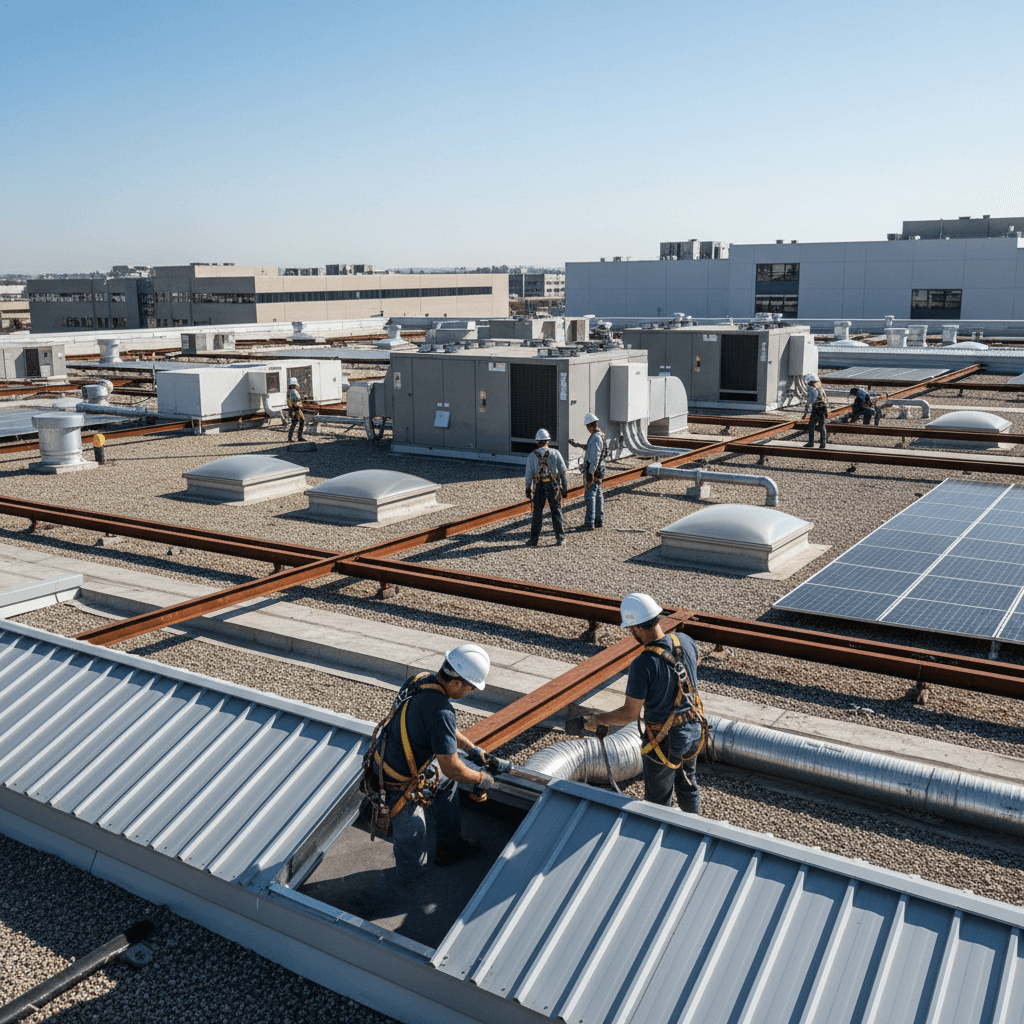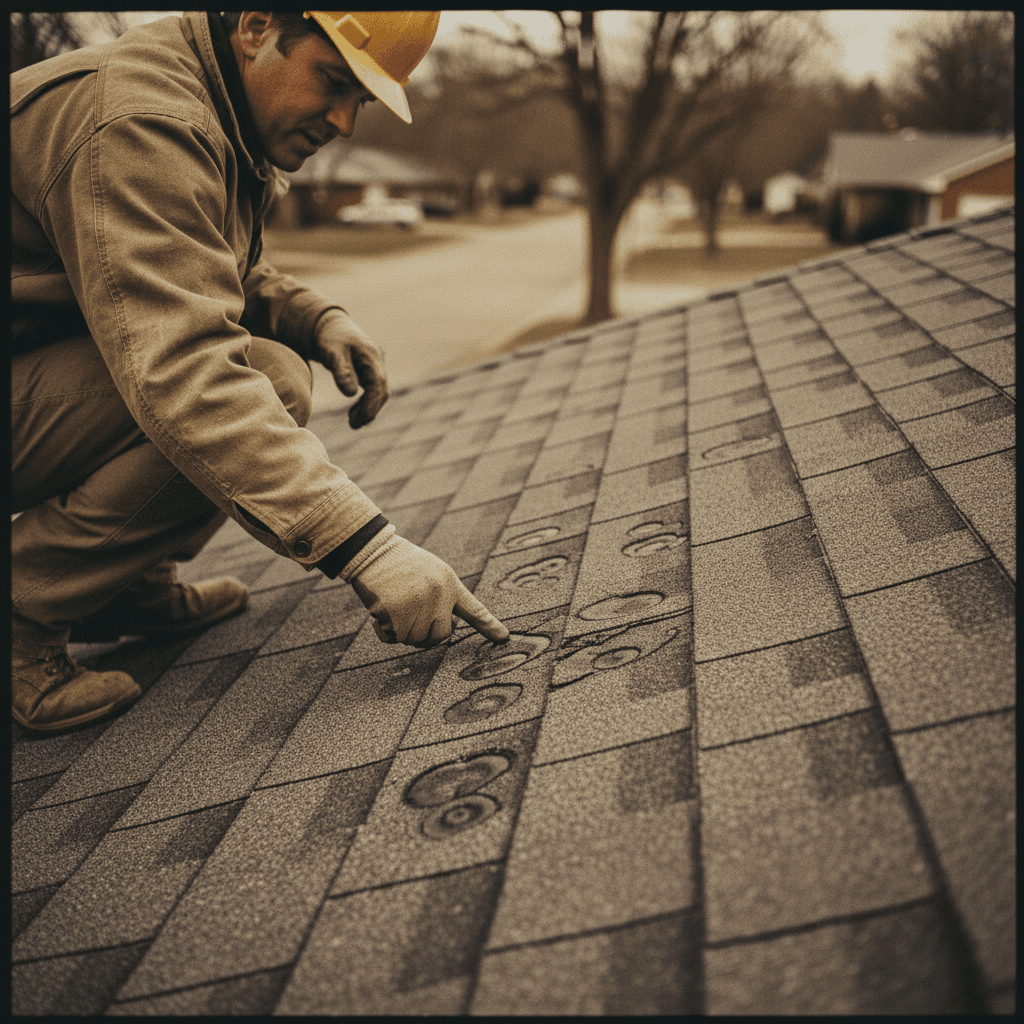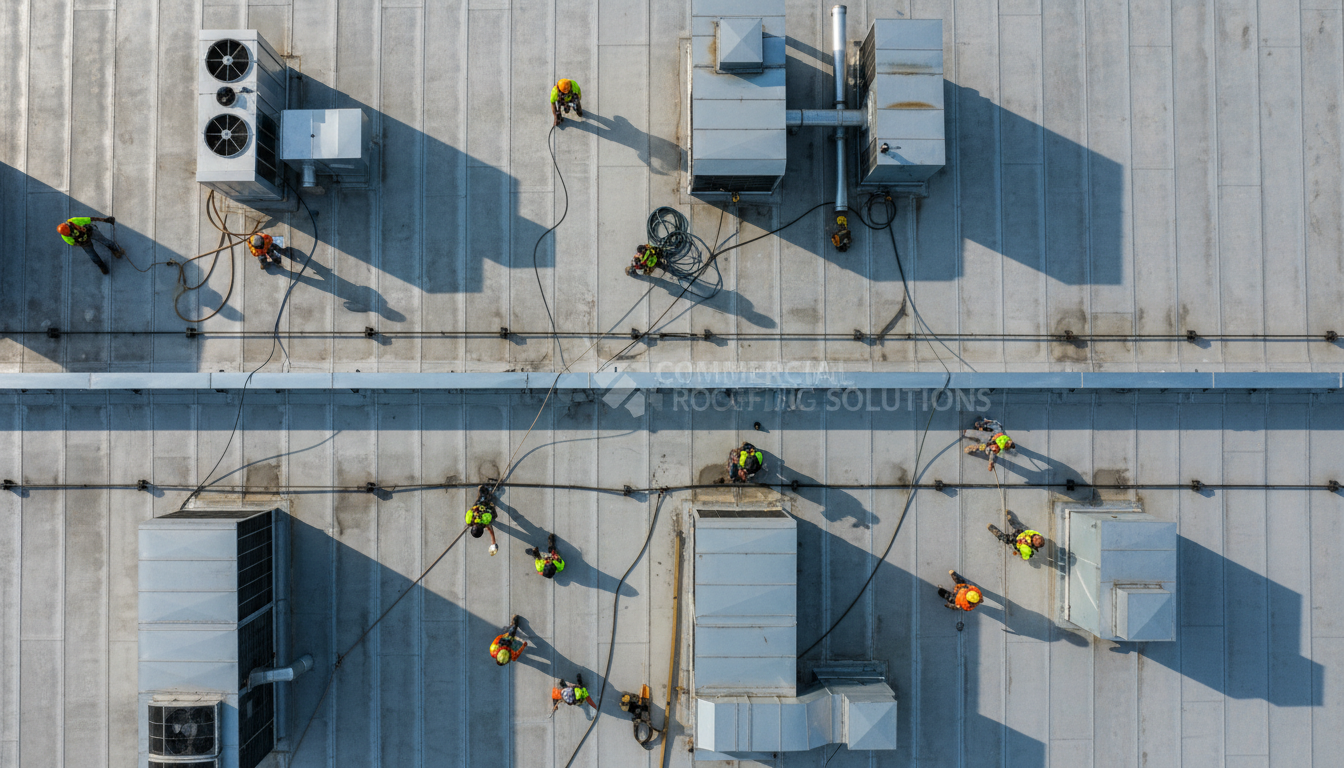
Deciding between flat roof repair vs replacement Utah depends on the extent of moisture intrusion and the remaining lifespan of the membrane. Minor leaks and localized seam issues often favor repair; however, persistent water pooling or widespread bubbling typically signal the need for a full replacement. Commercial owners should evaluate the current roof age against its typical 15 to 30 year lifespan to determine the most cost effective solution.
Navigating the complexities of commercial flat roofing in Utah requires more than just a quick patch when a leak appears. The extreme temperature swings of Box Elder County place immense stress on roofing membranes, often leaving property owners caught between the temporary fix of a repair and the significant capital expense of a full replacement. Choosing the wrong path can lead to recurring maintenance costs or premature failure of the entire system. This guide provides the expert clarity you need to make a financially sound decision for your facility. We will examine the critical signs that differentiate a minor issue from a structural failure; we will also explore the legal implications of the 25 percent rule and how modern roof coatings can extend your asset's lifespan without the cost of a complete tear off.
Deciding Between Flat Roof Repair and Replacement in Utah
Commercial property owners in Northern Utah face a unique set of challenges when maintaining their facilities. When a leak appears on a warehouse in Brigham City or an office building in Logan, the immediate reaction is often to patch the visible problem. While a quick fix is budget friendly today, the extreme temperature swings and heavy snow loads in Box Elder County can turn a series of small repairs into a massive financial drain. Finding the right balance in the flat roof repair vs replacement Utah debate requires looking beyond the immediate invoice and considering the total cost of ownership over the next decade.
Utah's high altitude and intense UV exposure accelerate the degradation of common flat roof membranes. Most commercial properties in our region utilize one of three systems: Thermoplastic Polyolefin (TPO), Ethylene Propylene Diene Terpolymer (EPDM), or Modified Bitumen. TPO is prized for its heat-reflective properties, while EPDM offers excellent durability against thermal shock. Modified Bitumen remains a staple for its multi-layered protection. However, once these materials reach the end of their service life, or if the underlying insulation becomes saturated, a replacement often becomes the more fiscally responsible choice.
At Anders Roofing, we help owners evaluate if their current system can be saved through targeted commercial roofing services or if the climate has finally won the battle. Regular Commercial Roof Maintenance in Utah can prolong this decision, but understanding the limitations of your specific membrane is the first step toward protecting your investment. You can learn more about Anders Roofing and our approach to providing durable, long term solutions for the Wasatch Front.
Signs Your Utah Commercial Roof Only Needs a Repair
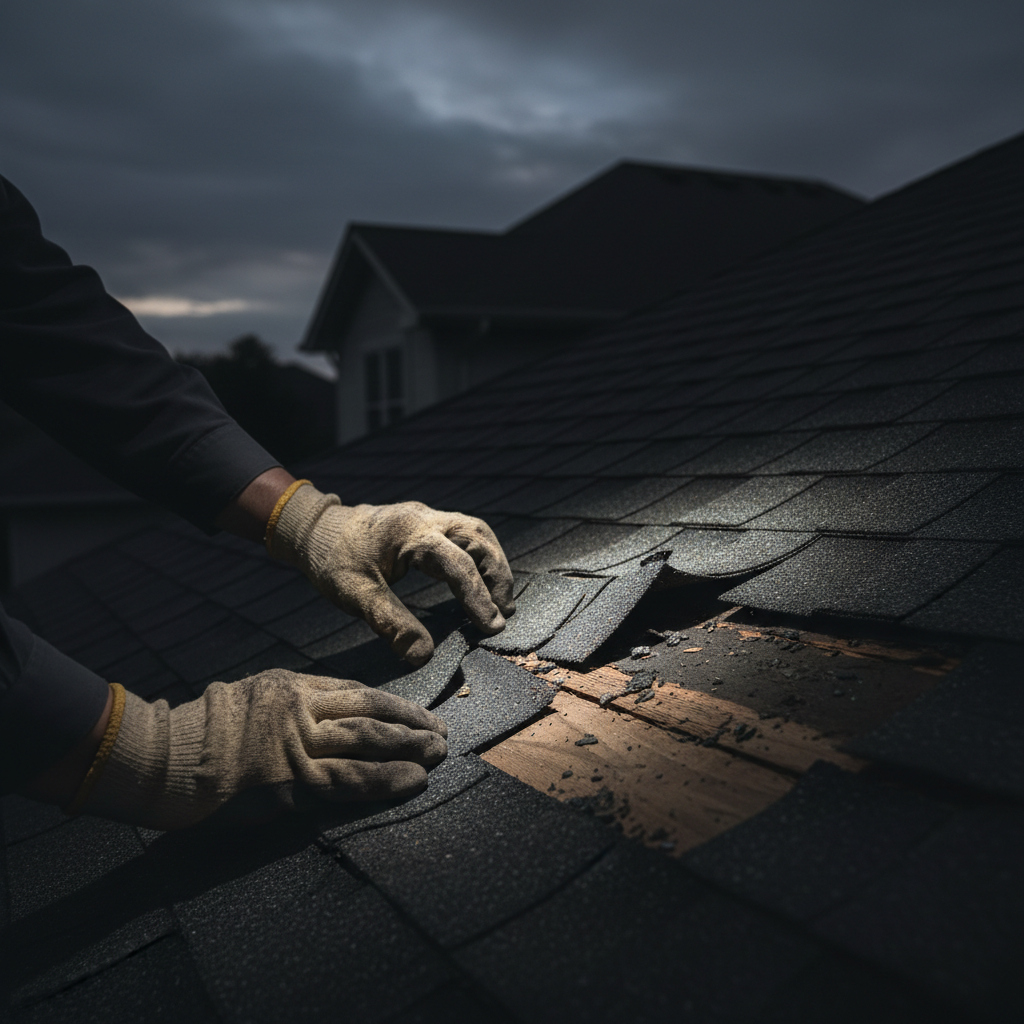
Repairing a commercial roof is a strategic choice when the underlying structure remains sound and the membrane retains its flexibility. For many properties in Northern Utah, a localized issue does not necessitate a complete overhaul. If your flat roof system is less than 10 to 12 years old, it is often a prime candidate for targeted commercial roofing services rather than a full tear-off.
Successful repairs typically address specific, isolated failures such as: - A single puncture caused by fallen debris or foot traffic. - A loose seam where the adhesive or weld has begun to separate. - Minor cracking around a specific flashing or HVAC curb.
The most critical factor in this evaluation is the state of the insulation. If a professional inspection confirms the insulation beneath the membrane is dry, a patch or seam repair can effectively extend the system’s lifespan. However, the distinction between minor ponding and structural drainage issues is vital. Small areas of standing water that evaporate within 48 hours are usually manageable through minor adjustments. In contrast, deep pools that remain for days suggest structural sagging that a simple patch cannot fix.
For businesses in Box Elder County, identifying these needs before the heavy winter snow arrives is essential. A single compromised seam can quickly turn into a significant leak under the weight and freeze-thaw cycles of a Utah winter. By prioritizing early detection through regular Commercial Roof Maintenance in Utah, owners can navigate the flat roof repair vs replacement Utah decision by choosing the least invasive, most cost-effective path available.
When to Invest in a Full Flat Roof Replacement
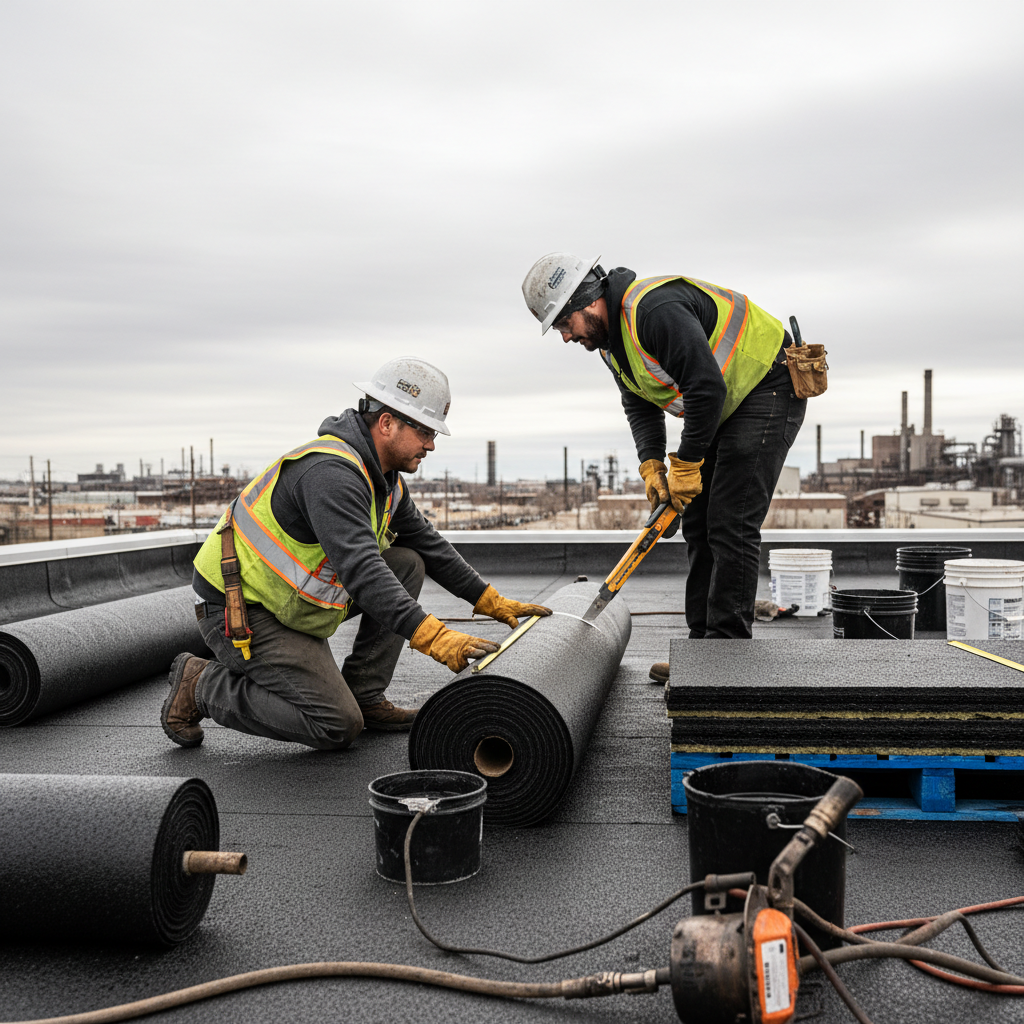
While localized fixes address immediate threats, certain red flags signal that a membrane has reached its absolute limit. In Northern Utah, the combination of high altitude UV rays and extreme temperature swings can degrade materials faster than in more temperate regions. For property owners weighing the flat roof repair vs replacement Utah dilemma, widespread bubbling or blistering is often the first sign of systematic failure. These blisters occur when moisture is trapped between the membrane layers or the substrate, indicating that the adhesive has failed or that the system is venting water vapor from a compromised interior.
Once leaks become persistent across multiple locations, the integrity of the underlying insulation becomes the primary concern. Saturated insulation is a critical failure point. When rigid foam or fiberboard becomes wet, it loses its R-value, effectively turning your roof into a thermal conductor rather than an insulator. This leads to spiked energy bills during intense Utah summers and freezing winters. At this stage, commercial roofing services focused on patching are no longer viable because you cannot successfully bond new material to a failing, waterlogged foundation.
Indicator | Repair Likely | Replacement Recommended |
|---|---|---|
Membrane Age (TPO/Mod-Bit) | Under 12 years | 15 to 20+ years |
Scope of Damage | Less than 25% of surface | Widespread or multiple sectors |
Insulation State | Dry and structurally sound | Saturated or losing R-value |
Leak Frequency | Occasional, localized | Chronic and occurring in new spots |
Age is the final arbiter for most commercial systems. In the Utah climate, TPO and Modified Bitumen systems typically begin to show significant fatigue between the 15 and 20 year marks. High UV exposure causes the polymers in TPO to become brittle, leading to micro-cracking that eventually allows moisture to seep through the entire surface. If your building is approaching this age bracket, a full replacement ensures a dry interior and restored energy efficiency. You can learn more about Anders Roofing and how we assess these systems to provide honest, long term recommendations for your facility.
Understanding the 25 Percent Rule for Roofing
When evaluating your property, professional inspectors often reference the 25 percent rule. This industry standard dictates that if more than a quarter of the total roof surface is damaged or requires repair, a full replacement is usually the necessary course of action. This threshold is not just a recommendation based on longevity; it is frequently a requirement within local building codes. When you reach this level of degradation, the labor costs and material requirements for extensive patchwork begin to rival the price of a complete system installation.
For commercial flat roofs in the Wasatch Front, this rule is a critical benchmark in the flat roof repair vs replacement Utah decision. Patching membranes like TPO or EPDM creates numerous secondary seams and transition points. Every new seam is a potential entry point for water, especially during Northern Utah’s heavy snowmelt periods. Once you exceed 25 percent coverage, the structural integrity of the original system is compromised enough that individual commercial roofing services lose their long term value. Investing in a new, unified membrane becomes the only way to ensure a reliable, watertight seal across the entire facility footprint.
How Utah Weather Impacts the Lifespan of Flat Roof Membranes
These requirements are often a direct response to the environmental stress unique to the Intermountain West. In Box Elder County, we experience extreme diurnal temperature swings where a 40 degree shift in 24 hours is common. Such rapid changes force flat roof membranes to expand and contract aggressively. Over time, this thermal cycling pulls at the seams of EPDM and TPO systems, causing adhesives to fail or heat-welds to fatigue. Furthermore, Utah’s high altitude places your facility closer to intense UV radiation. These rays accelerate the breakdown of chemical stabilizers in the membrane, leading to the brittle, chalky texture often seen in the flat roof repair vs replacement Utah debate. Once the material loses its elasticity, it can no longer bridge the small gaps caused by seasonal building movement.
Snow loads present a separate, heavy challenge for Northern Utah businesses. A single cubic foot of settled snow can weigh upward of 20 pounds, and this weight accumulates quickly during lake-effect storms. On a commercial flat roof, excessive weight tests the structural integrity of the decking. If your roof has improper drainage or internal scuppers are blocked, the resulting ponding water adds immense static weight that leads to structural sagging. While localized commercial roofing services can address a specific leak, they cannot remediate the underlying structural bowing caused by years of snow pressure. In these cases, replacement is the only way to ensure the roof can safely support the next winter’s accumulation.
Commercial Roof Coating: The Cost-Effective Alternative to Replacement
Restoration coatings provide a strategic middle ground for property owners navigating the flat roof repair vs replacement Utah decision. These systems, primarily silicone and elastomeric, are applied directly over an existing membrane to extend its service life without the expense of a complete tear off. High solids silicone is often considered the best coating for a flat roof in the Intermountain West because it does not degrade under standing water, a common issue during the long snowmelt periods in Box Elder County.
The financial incentive for restoration is significant. A full commercial replacement typically costs between $8 and $15 per square foot, whereas professional coating applications generally range from $3 to $6 per square foot. This allows businesses to refresh their roof’s UV protection and waterproofing for a fraction of the capital expenditure.
Option | Estimated Cost per Sq. Ft. | Best Use Case |
|---|---|---|
Full Replacement | $8.00 – $15.00+ | Saturated insulation or structural damage |
Silicone Coating | $3.50 – $6.00 | Maximum UV and ponding water resistance |
Elastomeric Coating | $3.00 – $5.00 | Budget-friendly reflectivity for sloped flat roofs |
These commercial roofing services are only a viable option if the underlying structure is healthy. The existing insulation must be dry and the membrane must still be well-adhered to the substrate. If moisture is already trapped within the roof assembly, a coating will act as a vapor barrier, locking that moisture in and accelerating rot. Learning more about Anders Roofing can help you coordinate a professional inspection to see if your facility is a candidate for restoration before the winter weather arrives.
Estimating the Cost: Repair vs Replacement in Box Elder County
Navigating the financial aspect of the flat roof repair vs replacement Utah debate requires a granular look at local variables. In Box Elder County, repair costs for minor leaks or seam failures often range from several hundred to a few thousand dollars, depending on the complexity. However, full replacement remains the standard for older systems, with costs typically landing between $8 and $15 per square foot for most commercial applications.
Several factors influence these figures beyond simple square footage. Roof accessibility plays a major role; a single story warehouse in Brigham City is significantly less labor intensive than a multi story office building with limited staging area. The density of roof penetrations, such as HVAC units, skylights, and vents, also drives up the price. Each penetration requires detailed flashing work to prevent future leaks. Furthermore, disposal fees for tearing off old Modified Bitumen or multiple layers of saturated insulation add to the bottom line, as landfill costs in Northern Utah continue to rise.
Cost Factor | Impact on Budget |
|---|---|
Roof Penetrations | High: Requires custom flashing for each unit |
Material Type | Moderate: TPO is often more cost-effective than high-end EPDM |
Disposal Fees | Variable: Based on weight and number of layers removed |
Accessibility | Moderate: Affects labor hours and equipment needs |
When reviewing commercial roofing services, focus on the 10 year return on investment. A cheap repair might solve a leak today, but a full replacement with modern, reflective TPO can slash energy costs and eliminate the need for emergency service calls for two decades. You can learn more about Anders Roofing and how we provide transparent estimates tailored to the specific demands of your facility. Consistent Commercial Roof Maintenance in Utah remains the best way to keep these costs predictable and manageable over time.
Deciding between a minor repair or a complete replacement depends on your roof's age, the extent of the damage, and your long term budget goals. While quick fixes solve immediate issues, a new system often provides better value for aging Utah commercial properties. If you want expert help assessing your options, our team is available to provide a professional evaluation. You can review our various Services to find the right solution for your building's unique needs.